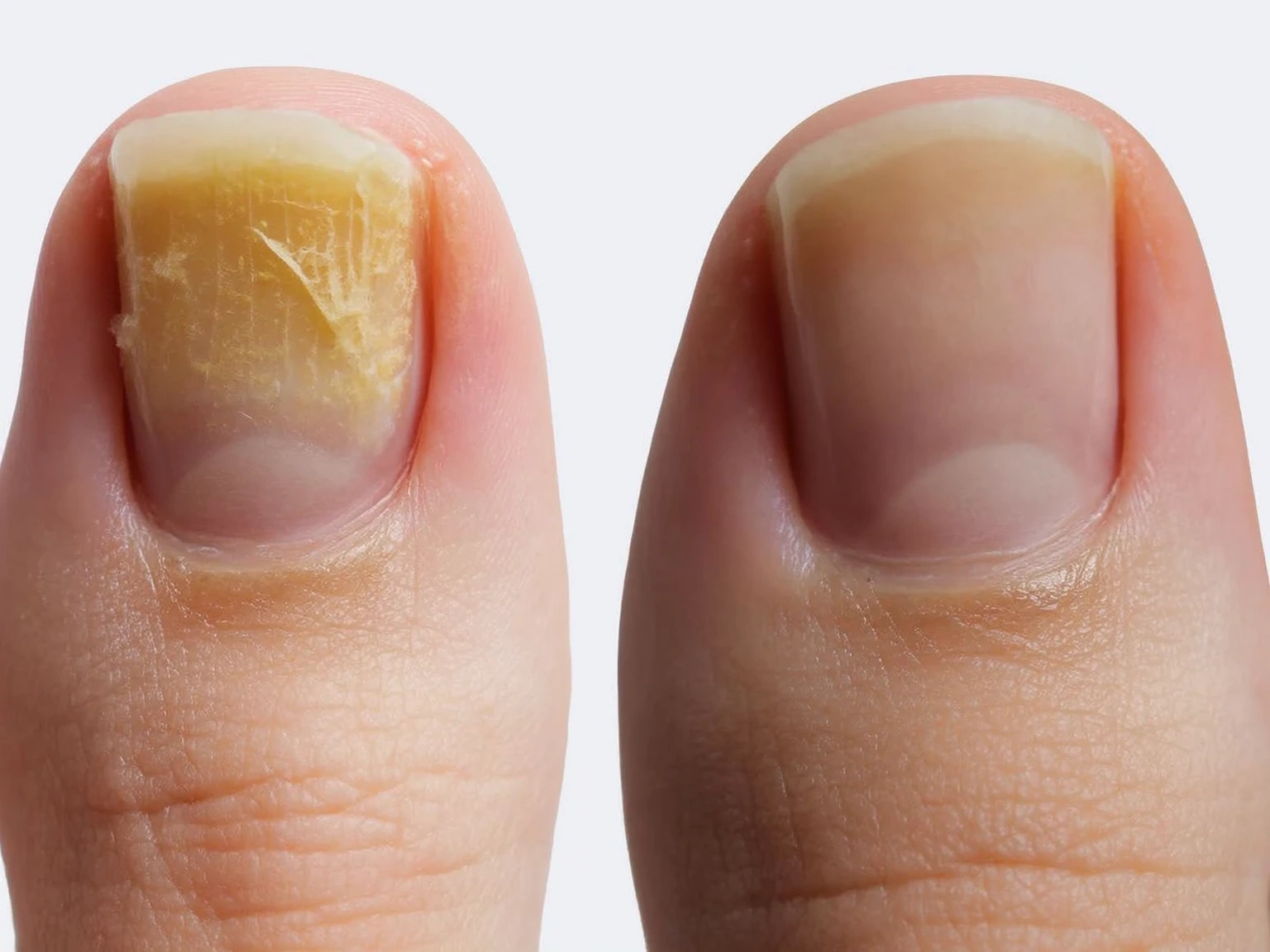
TL;DR
White spots on toenails are often harmless marks from injury or polish damage, but a chalky white patch on the surface that scrapes off can be white superficial onychomycosis, a type of fungus. Not every white spot is fungus, so have a physician confirm before you treat.
White spots on toenails send a lot of people straight to Google, and the honest answer is that it depends on what the spots look like and how they behave. Most are harmless. A few are fungus.
What causes white spots on toenails?
There are three common explanations, and they look different when you know what to check.
- Minor injury. Stubbing a toe, tight shoes or a dropped object can leave small white dots as the nail grows out.
- Surface damage from polish or manicure tools. Aggressive filing, gel removal and repeated polish can roughen the nail and leave white patches of dry keratin.
- Fungus. White superficial onychomycosis causes chalky, powdery white patches on the top of the nail.
Less often, white nails point to other health or skin issues, so a stubborn or widespread change deserves a medical look.
White spots on toenails: how to tell the cause
| Clue | Injury | Polish or keratin damage | Fungus (white superficial) |
|---|---|---|---|
| Look | Small dots or a line | Cloudy or rough patches | Chalky, powdery, soft white patches |
| Texture | Smooth, part of the nail | Dry, peeling surface | Can be scraped off like powder |
| Spreads over time | No, grows out with the nail | No, improves when you stop polish | Yes, can spread across the nail |
| Moves with nail growth | Yes, spots migrate forward | Often grows out | Not necessarily |
| Other signs | History of a bump | Recent polish, gel or acrylic | Athlete's foot, damp shoes |
What does white superficial onychomycosis look like?
It sits on the surface of the nail plate. You may see dull white islands that merge into a patch, and the nail can feel rough or crumbly on top. If you scratch the area gently with a clean tool and a white powder comes up, that points toward this type of fungus.
It differs from the more common nail fungus that starts under the tip of the nail and turns it yellow-brown. For that pattern, see what is toenail fungus.
Can nail polish cause white spots?
Polish itself is usually not the villain. The problem is what surrounds it: harsh removers, filing the surface to get polish to stick, and gel or acrylic removal that strips layers of nail. That can leave dry, white-looking patches that grow out in a few months.
Polish can also hide a fungal infection, and painted nails stay damp longer in sneakers. If you wear polish all summer, take it off between pedicures and look at the bare nail. Our post on toenail fungus and pedicures covers salon risks.
Are white spots a sign of zinc or calcium deficiency?
You will hear this a lot, but it is mostly a myth. True nutrient shortages are uncommon in people eating a normal diet, and small white dots are far more often a past bump. If you have other symptoms or a restricted diet, ask your doctor about testing instead of buying supplements.
When are white spots probably not fungus?
- The spots are small, scattered and not growing.
- They move toward the tip as the nail grows and then disappear.
- You can remember a stubbed toe or a recent gel manicure.
- The nail surface is smooth and the nail is not thickened.
In that case, protect the nail and wait. Switch to comfortable shoes and give the nail a break from polish.
When are white spots probably fungus?
- The white patch is chalky and spreads.
- The nail turns yellow, thickens or crumbles at the edge.
- You have athlete's foot, or a family member with nail fungus.
- Several toenails are changing at once.
Those signs deserve a test. A physician can send a clipping to a lab to confirm the cause, which is better than guessing. If you have been unsure whether your nail is getting worse, the list in signs toenail fungus is getting worse helps.
How is fungus treated once it is confirmed?
A surface infection like this is often more reachable for a topical than a deep one, because the fungus is not buried under a thick nail. Vuret Original is a brush-on pen with itraconazole 1.5% and terbinafine 1.5% in a DMSO base, described as 50% higher strength than other topicals available online, with a 90-day money-back guarantee and free clippers and file. See the Vuret Original page.
Improvement is often visible at 3 to 6 months, and a fully clear nail typically takes 9 to 12 months. If another topical has not worked well, Vuret 2.0 uses efinaconazole 10% and ciclopirox olamine 8%. Both are compounded medications and are not FDA-approved, and a U.S.-licensed physician reviews your visit first.
When should you see a doctor in person?
Get checked in person if the nail is painful, lifting, bleeding or draining, if white spots appear on many nails, or if you have diabetes or a weakened immune system. A dark streak under the nail needs prompt evaluation because it is not a fungal pattern.
How should you take a closer look at the nail?
Do a simple check in good light. Press the white spot gently: if it is a dot embedded in the nail and does not scrape, it is probably a trauma mark. If it is soft and powdery and a clean nail file lifts it off, think surface fungus.
Photograph the spot with a coin beside it, and recheck in four weeks. A dot that has moved forward with the nail is a good sign. A patch that has grown wider is not.
Also look at the other toes and the skin between them. Peeling, itchy skin between the toes suggests athlete's foot, which often travels to nails and is worth treating alongside them.
What can you do to protect your nails?
- Pick shoes with room in the toe box and change damp socks.
- Skip aggressive surface filing and let polish rest between uses.
- Treat athlete's foot at the same time, since it spreads to nails.
- Keep tools clean, and do not share clippers.
More tips are in how to prevent toenail fungus.
Bottom line
Most white spots on toenails are harmless and grow out. A spreading, chalky patch is worth testing. If a physician confirms fungus, you can start an online visit for Vuret.
Vuret Original: Itraconazole 1.5% + Terbinafine 1.5% + DMSO
A brush-on prescription pen with itraconazole + terbinafine and DMSO to carry them through the nail. Prescribed online by a U.S.-licensed physician only if it is right for you. Compounded medications are not FDA-approved.
See Vuret OriginalFrequently asked questions
Are white spots on toenails always fungus?
No. Many are minor injury marks or damage from polish and filing that grow out with the nail. A chalky white patch that spreads or scrapes off like powder is more suspicious and should be checked by a physician.
What is white superficial onychomycosis?
It is a type of nail fungus that affects the surface of the nail, creating dull, chalky white patches. It differs from the more common type that starts under the nail tip and turns it yellow-brown. A lab test on a nail clipping can confirm it.
Do white spots on toenails mean I lack zinc or calcium?
Rarely. Small white dots are far more often caused by past trauma to the nail. If you have a restricted diet or other symptoms, ask your doctor about testing before taking supplements.
How long do white spots from injury take to go away?
They grow out with the nail. Toenails grow slowly, so it can take many months for a spot to reach the tip and be trimmed away. If new spots keep appearing or the nail changes texture, have it looked at.
How can I treat white toenail fungus at home?
First confirm it is fungus, since polish damage and injury look similar. If confirmed, a prescription topical designed to penetrate the nail is the usual route. Vuret Original is one option, reviewed by a U.S.-licensed physician through an online visit.