TL;DR
To get rid of toenail fungus, confirm it is actually fungus, choose a treatment that can reach the nail (usually a prescription topical or oral antifungal), use it daily for months, and keep your feet dry to prevent reinfection. Expect 3 to 6 months to see improvement and 9 to 12 months for a fully clear nail.
How to get rid of toenail fungus comes down to six steps: confirm the diagnosis, choose a treatment that reaches the nail, stay consistent, protect your feet, deal with reinfection sources and be patient. It is slow, but it is doable.
Step 1: Is it really toenail fungus?
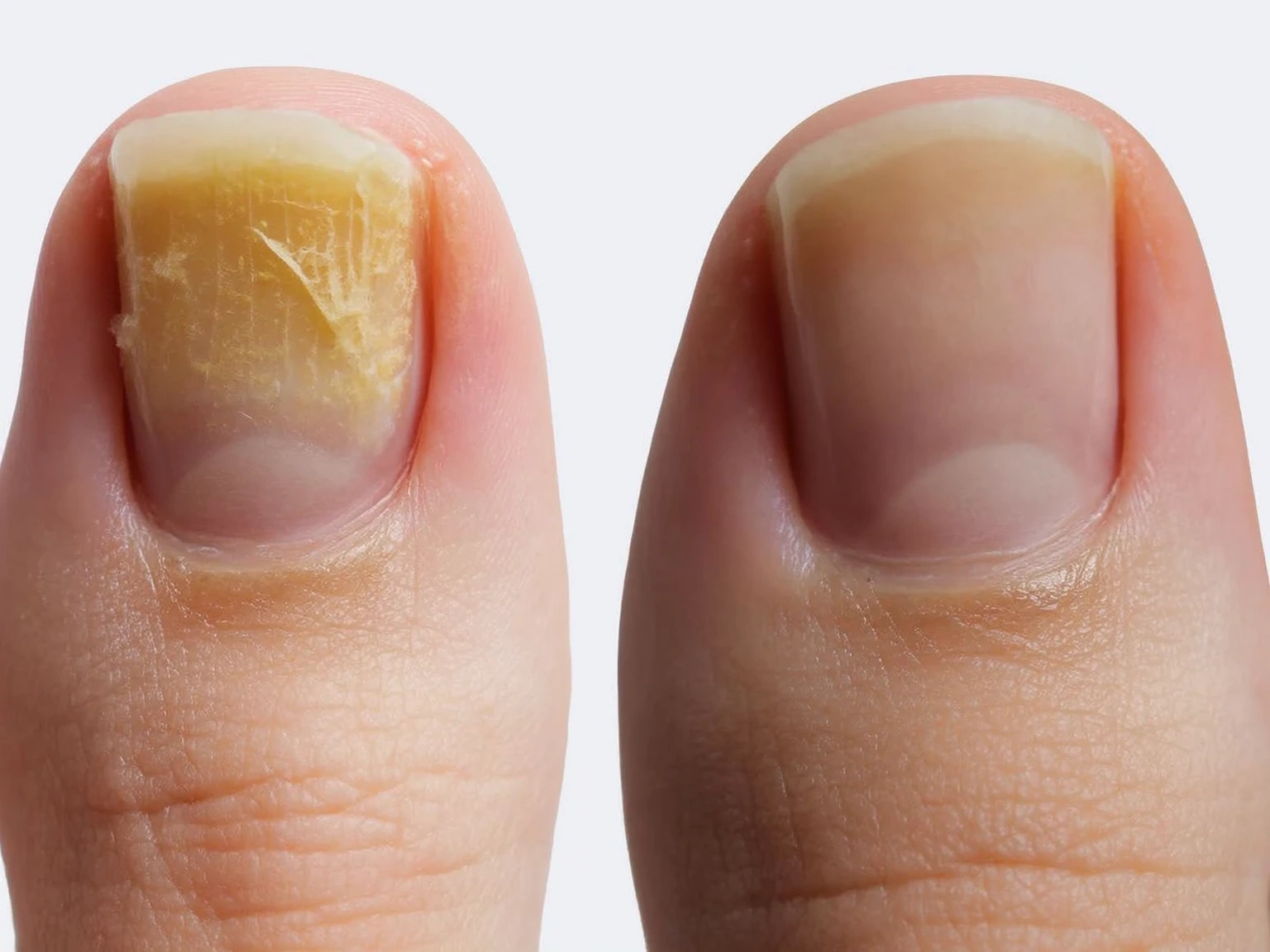
Thick, yellow, brown or white nails that crumble are classic signs, but psoriasis, injury and other conditions look similar. A clinician can confirm, sometimes with a nail clipping test. Our primer on what toenail fungus is covers the signs. You can also see symptoms and causes on Mayo Clinic.
Skip ahead to a doctor if you have diabetes, poor circulation, pain, pus, or redness spreading up the toe. Read toenail fungus and diabetes to understand why.
Step 2: Which treatment can actually get rid of it?
You have a few real options. Match the treatment to how severe things are.
- Prescription topical: best for mild to moderate infections. Vuret Original (itraconazole 1.5% + terbinafine 1.5% + DMSO) and Vuret 2.0 (efinaconazole 10% + ciclopirox olamine 8%) are compounded brush-on pens. Brand options include Jublia and Penlac.
- Oral antifungal: often better for severe, thick or multi-nail cases. See oral terbinafine vs topical.
- Laser: mixed evidence, can be pricey.
- OTC and home remedies: help with athlete's foot and support care, but rarely clear a true nail infection.
Our full ranking is in best toenail fungus treatments. Compounded medications such as Vuret are not FDA-approved, and a physician decides whether they are appropriate for you.
Step 3: How do you apply a topical correctly?
- Wash and dry your feet and nails fully.
- Trim the nail straight across and file down thick areas gently. Disinfect your tools after each use.
- Apply the medication exactly as your prescriber directs, including the edges and under the tip.
- Let it dry before socks or shoes.
- Do this every day. Missed days are the number one reason topicals fail.
Filing matters more than people think, because less thickness means less barrier for the medicine to cross. Vuret Original comes with free nail clippers and a file for this reason.
Step 4: How long does it take?
Slowly. A toenail grows roughly 1 mm a month, so the infected part has to grow all the way out. Improvement is often visible at 3 to 6 months. A fully clear nail typically takes 9 to 12 months, sometimes longer. See how long it takes to clear toenail fungus for the timeline.
Judge progress by clear nail growing in at the base, not by how the old part looks. Taking photos monthly helps.
Step 5: How do you stop it from coming back?
Fungus loves warm, damp places, and relapse is common. These habits cut the risk:
- Treat athlete's foot at the same time, since it feeds the nail infection.
- Dry feet well, especially between toes.
- Wear breathable socks and change them when sweaty.
- Rotate shoes and let them dry out. Consider an antifungal spray or powder inside them.
- Wear sandals in locker rooms and public showers.
- Do not share clippers, and disinfect your own.
Should you treat all your toenails or just the bad one?
Treat the nails that show signs of infection, and keep an eye on the rest. Fungus spreads between neighboring toes, and a nail that looks mildly off often has early infection. Treat athlete's foot between the toes too, because the skin is a reservoir that keeps reinfecting the nail.
Washing socks on a hot cycle and wiping down shower floors are small steps that also help.
What if the first treatment does not work?
That happens, and it does not mean you are out of options. Check the basics first: Were you applying daily? Was the nail filed? Is athlete's foot still active? Was it truly fungus?
If the answer is yes to all of those, talk to a doctor about switching ingredients, such as moving to Vuret 2.0, adding an oral antifungal, or trying a different approach. Persistence tends to pay off more than hopping between products every few weeks.
Is it safe to paint over the nail or hide it?
Nail polish can trap moisture and block medication, so it is best to avoid it while you treat. If you must cover the nail for an event, remove the polish afterward and clean the nail before your next application.
What does not work well?
Most people try home fixes first. Vinegar, tea tree oil, Vicks and baking soda have little to no solid evidence for clearing a true nail infection, and tea tree oil can irritate skin. We review what is worth a shot in home remedies for toenail fungus, and why OTC products usually fall short in OTC vs prescription nail fungus treatment.
Can you get a prescription without a clinic visit?
Yes. With Vuret, you complete a short online visit, a U.S.-licensed physician reviews it and prescribes if appropriate. It is no-insurance, ships discreetly, and you are charged for medication only if the doctor approves. Original also includes a 90-day money-back guarantee. Learn the process in toenail fungus treatment via telehealth, then start on the Vuret Original page.
Vuret Original: Itraconazole 1.5% + Terbinafine 1.5% + DMSO
A brush-on prescription pen with itraconazole + terbinafine and DMSO to carry them through the nail. Prescribed online by a U.S.-licensed physician only if it is right for you. Compounded medications are not FDA-approved.
See Vuret OriginalFrequently asked questions
What is the fastest way to get rid of toenail fungus?
Oral antifungals like terbinafine are generally the fastest route for severe cases, at about 12 weeks of pills, but the nail still needs months to grow out. For mild to moderate cases, a prescription topical is a common choice. There is no overnight fix.
Can toenail fungus go away on its own?
It rarely does. Without treatment it often stays or slowly worsens, and it can spread to other nails or to the skin. Early treatment tends to be easier.
Does vinegar or tea tree oil get rid of toenail fungus?
The evidence is weak. Small studies on tea tree oil exist but results are inconsistent, and vinegar has little support. They are fine as supporting care, not as your main treatment.
Why does toenail fungus keep coming back?
Common reasons are stopping treatment too early, untreated athlete's foot, damp shoes and reinfection from public floors. Finishing the full course and drying shoes and feet help a lot.
When should I see a doctor for toenail fungus?
See one in person if you have diabetes, poor circulation, pain, swelling, pus or a foot wound. Otherwise, a telehealth visit can confirm treatment options and prescribe if appropriate.
Do I need to remove my nail?
Usually not. Surgical removal is reserved for severe, painful or treatment-resistant cases, and a doctor in person would decide that.