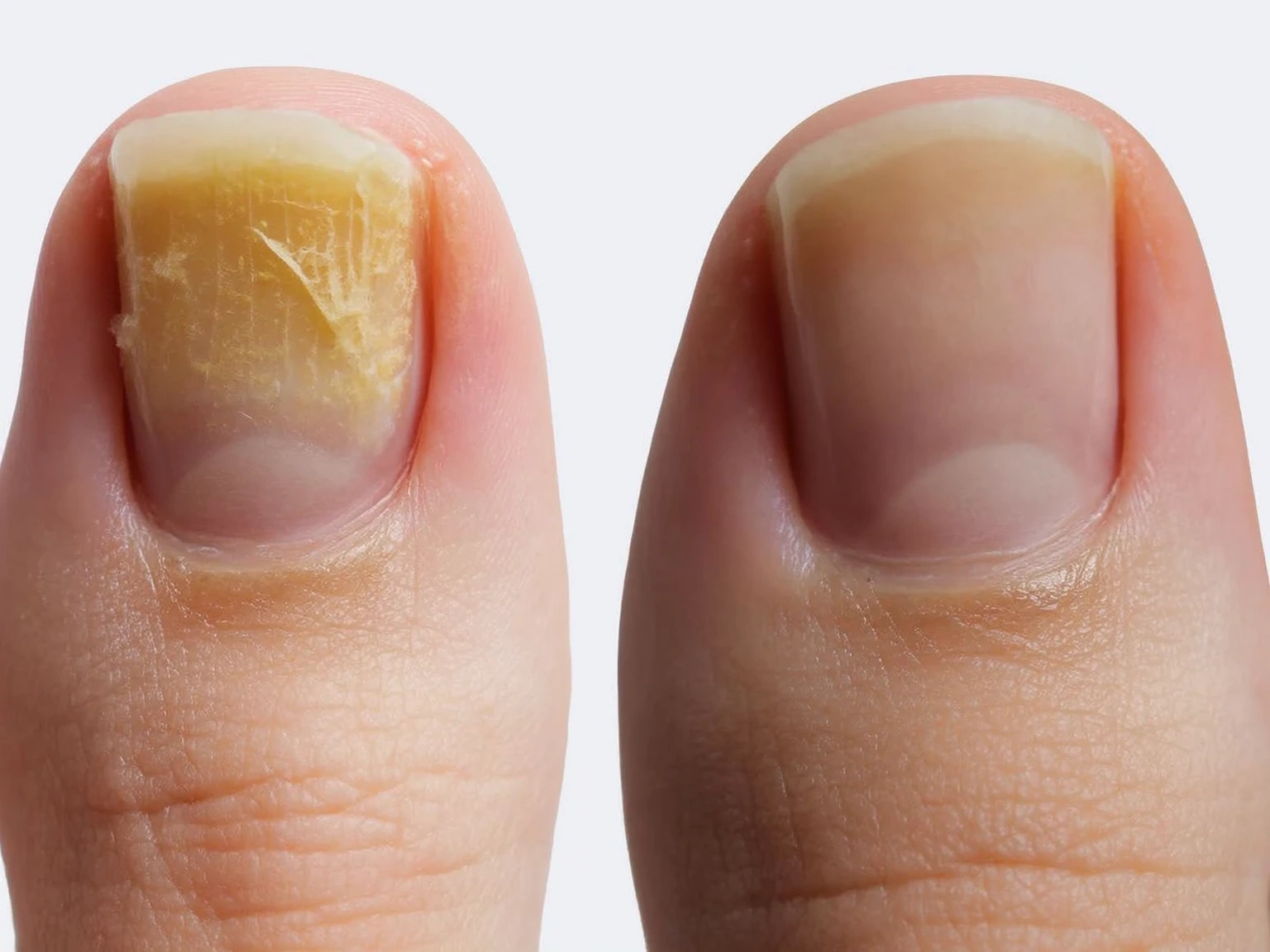
TL;DR
The best prescription toenail fungus treatment without pills is a prescription topical, and the top picks are Vuret Original, Vuret 2.0 and Jublia. They differ mainly in ingredients, whether they are FDA-approved, and cost. If you want a prescription pill instead, that is a separate decision covered in our oral vs topical comparison.
The best prescription toenail fungus treatment for people who want to skip pills is a prescription-strength topical, applied to the nail and surrounding skin every day for several months. This guide ranks only prescription topicals. For pills, laser and over-the-counter options too, see best toenail fungus treatments.
Why choose a prescription topical for toenail fungus?
Nail fungus lives under and inside a hard plate of keratin, which blocks most creams and OTC liquids. Prescription topicals are formulated to get through, and they act mainly where the fungus lives instead of traveling through your whole body.
That matters if you take other medications, have liver concerns, or just do not want a pill. The trade-off is time. Topicals usually run 6 to 12 months or longer.
What prescription topicals are available for toenail fungus?
| Treatment | Active ingredient(s) | FDA-approved? | Typical use |
|---|---|---|---|
| Vuret Original | Itraconazole 1.5% + terbinafine 1.5% + DMSO | No (compounded) | Daily brush-on |
| Vuret 2.0 | Efinaconazole 10% + ciclopirox olamine 8% | No (compounded) | Daily brush-on |
| Jublia | Efinaconazole 10% | Yes | Once daily, about 48 weeks |
| Kerydin | Tavaborole 5% | Yes | Once daily, about 48 weeks |
| Penlac | Ciclopirox 8% | Yes | Daily lacquer, up to 48 weeks |
Your doctor gives you exact directions for compounded products, so follow those over any general timeline.
1. Vuret Original: best combination topical
Best for: mild to moderate toenail fungus when you want two antifungals and online convenience.
Vuret Original combines itraconazole 1.5% and terbinafine 1.5% with DMSO in a brush-on pen. It is 50% higher strength than other topicals available online. The DMSO is there to help carry the medicine across the nail, which we explain in how DMSO helps medicine penetrate the nail. You can read about both antifungals in our guides to itraconazole and terbinafine.
- Pros: two antifungals, no insurance needed, discreet shipping, 90-day money-back guarantee, free nail clippers and file.
- Cons: compounded and not FDA-approved, needs months of daily use.
Learn more on the Vuret Original page.
2. Vuret 2.0: best for stubborn nails
Best for: people whose nails have not responded to other topicals.
Vuret 2.0 is a brush-on pen with efinaconazole 10% and ciclopirox olamine 8%. It essentially stacks the active ingredient in Jublia with the active ingredient in Penlac. See the Vuret 2.0 page, or compare it with the original in Vuret Original vs Vuret 2.0.
- Pros: two proven topical ingredients in one product.
- Cons: compounded and not FDA-approved, and no topical works fast.
3. Jublia: best FDA-approved topical
Best for: people with insurance coverage who prefer an FDA-approved brand.
Jublia (efinaconazole 10%) is applied once daily for about 48 weeks. It is among the better-studied topicals, and it has a brush applicator that makes it easy to cover the nail edges. Cost without coverage is the main drawback. We break down how it stacks up against a classic lacquer in Jublia vs ciclopirox.
- Pros: FDA-approved, large clinical program.
- Cons: can be expensive, single ingredient, long course.
4. Kerydin (tavaborole 5%): a reasonable alternative
Best for: people who cannot use or did not tolerate azole-type antifungals.
Kerydin uses a different kind of antifungal (a boron-based one) and is applied once daily for about 48 weeks. Its results in trials were broadly similar in range to other topicals. It is a useful option for variety, though it is less commonly chosen first.
- Pros: FDA-approved, different mechanism.
- Cons: cost, burning or irritation around the nail in some people.
5. Penlac (ciclopirox 8% lacquer): the budget-friendly classic
Best for: very mild, early infections.
Penlac is brushed on daily and the built-up layers are wiped off with alcohol weekly. It has been around since the late 1990s and has a long safety record. Its limits are modest results and a fussy routine.
- Pros: FDA-approved, long track record, typically lower cost.
- Cons: weaker penetration, routine is annoying, slow.
When is a prescription topical not enough?
Topicals are best for infections that involve less than about half the nail and do not reach the nail root. If most of the nail is thick and crumbling, or several nails are involved, a doctor may suggest an oral antifungal, sometimes with a topical alongside. Read oral terbinafine vs topical to see how that decision usually goes.
See a doctor in person if you have diabetes, poor circulation, pain, pus, or redness spreading up the toe. Our note on toenail fungus and diabetes explains why.
How should you apply a prescription topical for the best results?
Clean, dry nails absorb better. Trim the nail short and file down any thick, chalky areas before each application, because a thinner nail is an easier barrier to cross. Disinfect clippers and files after use so you do not reinfect yourself.
Apply to the full nail, the skin folds around it and under the free edge, then let it dry before putting on socks. Consistency beats intensity. Missing a few days here and there quietly adds months to the timeline.
What should you expect from the first 6 months?
Probably not much at first. Most people notice a thin band of clear, healthy nail growing in from the base somewhere between months 3 and 6. The discolored part stays until it grows out, and that is normal.
A fully clear nail typically takes 9 to 12 months. If you see no change at all after several months of daily use, tell your doctor, since a different topical or an oral drug may be the better route.
How do you get a prescription for toenail fungus online?
You fill out a short health questionnaire, a U.S.-licensed physician reviews it, and if the treatment is appropriate they prescribe it. With Vuret, you are charged for the medication only if the doctor approves. We explain the process in toenail fungus treatment via telehealth.
To see whether you qualify, start on the Vuret Original page.
Vuret Original: Itraconazole 1.5% + Terbinafine 1.5% + DMSO
A brush-on prescription pen with itraconazole + terbinafine and DMSO to carry them through the nail. Prescribed online by a U.S.-licensed physician only if it is right for you. Compounded medications are not FDA-approved.
See Vuret OriginalFrequently asked questions
What is the best prescription treatment for toenail fungus?
It depends on severity. For mild to moderate cases, a prescription topical such as Vuret Original, Vuret 2.0 or Jublia is a common starting point. For severe infections, oral terbinafine is often stronger. A doctor can match the option to your nail and health history.
Is there a prescription toenail fungus cream without pills?
Yes. Prescription topicals like Jublia, Kerydin, Penlac and compounded options such as Vuret are applied directly to the nail. They avoid the liver monitoring that can come with oral antifungals.
Are compounded topicals as good as brand-name ones?
They are different products. Brand-name topicals are FDA-approved and have published trials. Compounded medications are made in licensed pharmacies to a doctor's prescription and are not FDA-approved, so we cannot claim equal results.
How long do prescription topicals take to work?
Improvement is often visible at 3 to 6 months, and a clear nail typically takes 9 to 12 months. New healthy nail grows from the base, so you are waiting for the damaged part to grow out.
Do I need insurance to get a prescription toenail fungus treatment?
Not with Vuret. It is cash-pay, with no insurance needed. Brand products like Jublia often depend on insurance coverage to be affordable.
Disclosure: Vuret makes the Vuret Original featured on this page, so we have a financial interest in it. We still list real alternatives, including when another option may suit you better. This article is educational and is not a substitute for advice from your own doctor.