Disclosure: Vuret makes the Vuret Original featured on this page, so we have a financial interest in it. We still list real alternatives, including when another option may suit you better. This article is educational and is not a substitute for advice from your own doctor.
TL;DR
The best OTC toenail fungus treatment is an undecylenic acid nail liquid for very mild, early cases, but no over-the-counter option reliably gets through the nail plate. If you have tried drugstore products for a few months with no change, a prescription topical like Vuret Original is the next logical step.
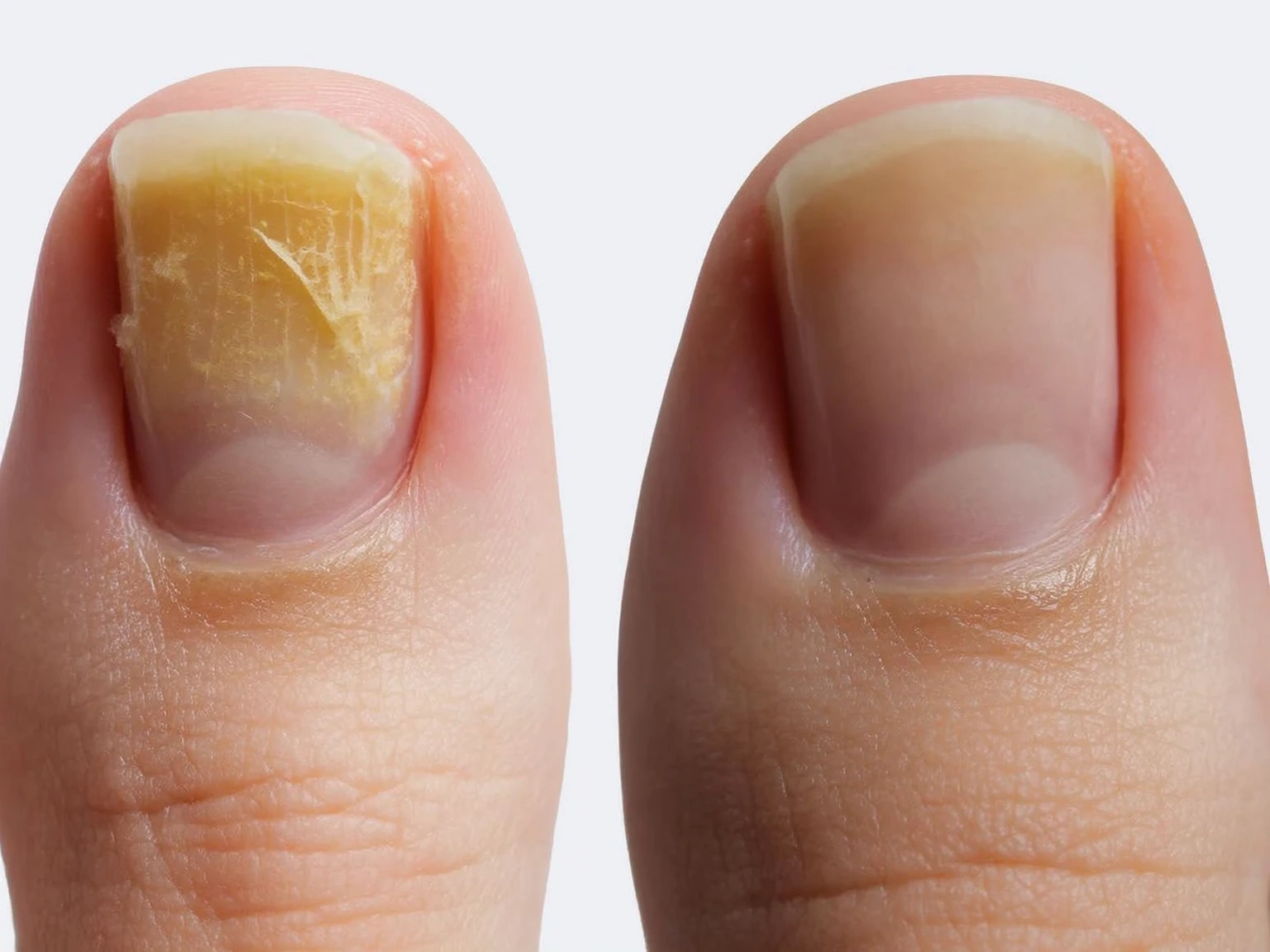
The best OTC toenail fungus treatment is one that touches the fungus, and that is exactly where most drugstore products struggle. The fungus lives under and inside a hard, keratin-rich nail plate, and a lot of what you find on the shelf was designed for the skin between your toes.
Below, the options are ranked by ingredient rather than brand, because the active ingredient is what decides whether a product has any chance. If you want the short version: they are fine for a tiny, early spot and weak for anything established.
Why do most OTC toenail fungus products disappoint?
A toenail is thick, dense and has no blood supply you can reach from the outside. A cream or liquid has to soak through that plate to reach fungus that is sitting underneath it.
Many OTC products also sit on the surface and get wiped off by socks and showers. That is why people often say they used a product "religiously" for three months and saw nothing. For more on the gap, see our guide to OTC vs prescription nail fungus treatment.
What are the best OTC toenail fungus treatments, ranked?
1. Undecylenic acid nail liquids: best OTC pick for early, mild cases
Best for: A small discolored edge on one nail, caught early.
- Pros: Sold as nail-specific liquids and pens, inexpensive, widely available, low risk of side effects.
- Cons: Undecylenic acid is a fatty-acid antifungal with limited ability to penetrate a thick nail. Results are modest and slow.
2. Urea 40% nail softening cream: useful helper, not a treatment
Best for: Thick, crumbly nails that you want to thin out before using something else.
- Pros: Softens and breaks down keratin, which makes trimming and filing easier and can help other medicine reach the nail.
- Cons: Urea is not an antifungal. On its own it will not clear an infection.
3. Terbinafine 1% cream: strong antifungal, wrong form for nails
Best for: Athlete's foot on the skin around the nail.
- Pros: Terbinafine is a well-proven antifungal, and the cream is easy to buy.
- Cons: OTC terbinafine 1% cream is labeled for skin infections, not nails. A cream is a poor vehicle for crossing the nail plate. We cover this in detail in Lamisil cream vs prescription for toenail fungus.
4. Tolnaftate: fine for skin, little for nails
Best for: Mild athlete's foot, as a companion treatment.
- Pros: Cheap, safe, and a reasonable choice if the skin between your toes is also affected.
- Cons: Labeled for skin. There is little reason to expect it to clear fungus under a nail.
5. Tea tree oil: popular, but the evidence is thin
Best for: People who want a natural option and accept the odds.
- Pros: Some antifungal activity in the lab, and it is easy to find.
- Cons: Small studies with mixed results, and it can irritate skin or trigger an allergic rash. See our home remedies for toenail fungus guide for the honest rundown.
| OTC option | Type | Labeled for nails? | Realistic expectation |
|---|---|---|---|
| Undecylenic acid liquid | Antifungal fatty acid | Often yes | May help very mild cases |
| Urea 40% cream | Keratin softener | Not an antifungal | Supports other treatment |
| Terbinafine 1% cream | Antifungal | No, skin only | Treats athlete's foot, weak for nails |
| Tolnaftate | Antifungal | No, skin only | Treats athlete's foot |
| Tea tree oil | Essential oil | No | Unproven, may irritate |
When should you skip OTC and go to a prescription topical?
Move on if any of these sound like you:
- You have used an OTC product consistently for 8 to 12 weeks and the nail looks the same.
- The nail is thick, yellow-brown, or lifting away from the nail bed.
- More than one nail is involved, or the infection reaches the half-moon at the base.
- You are a runner or hiker and keep re-infecting the nail.
Prescription topicals are formulated to get into the nail. They use stronger or different antifungals and often a carrier that helps the medicine cross the plate. Our deeper explainer on how DMSO helps medicine penetrate the nail covers why that matters.
What does Vuret offer beyond what you can buy at the drugstore?
Vuret Original is a brush-on pen with itraconazole 1.5% and terbinafine 1.5% in a DMSO base. It is described as 50% higher strength than other topicals available online. A U.S.-licensed physician reviews your online visit first and, if appropriate, prescribes it, and you are charged for the medication only if the doctor approves.
It is a compounded medication made in a licensed U.S. 503A pharmacy, which means it is not FDA-approved. It comes with a 90-day money-back guarantee, plus free nail clippers and a file. You can read about the product on the Vuret Original toenail fungus page.
For stubborn cases that have not responded to other topicals, Vuret 2.0 combines efinaconazole 10% and ciclopirox olamine 8%. You can compare them in the Vuret 2.0 overview.
What timeline should you expect with any topical?
Nails grow slowly, roughly a millimeter a month, and a toenail can take a year or more to grow out fully. That is true for OTC and prescription products alike.
With a prescription topical, improvement is often visible at 3 to 6 months, and a fully clear nail typically takes 9 to 12 months. If an OTC product has shown nothing at the 3 month mark, that is useful information. Read how long it takes to clear toenail fungus for what progress actually looks like.
Who should see a doctor in person?
Skip self-treatment and book an in-person visit if you have diabetes, poor circulation, a weakened immune system, pain, swelling, pus, or a dark streak under the nail. Those are not fungus until a clinician says so. People with diabetes should read our page on toenail fungus and diabetes first.
The bottom line
If you want to try OTC first, pick an undecylenic acid nail liquid, add urea if the nail is thick, and give it a fair 8 to 12 weeks. If nothing changes, a prescription topical is the better use of your time and money. When you are ready, you can start an online visit for Vuret Original.
Vuret Original: Itraconazole 1.5% + Terbinafine 1.5% + DMSO
A brush-on prescription pen with itraconazole + terbinafine and DMSO to carry them through the nail. Prescribed online by a U.S.-licensed physician only if it is right for you. Compounded medications are not FDA-approved.
See Vuret OriginalFrequently asked questions
What is the best OTC toenail fungus treatment?
An undecylenic acid nail liquid is the best OTC choice for a very mild, early case. No OTC product is reliable for established infections because they struggle to get through the nail plate.
Does Lamisil cream work on toenail fungus?
OTC terbinafine 1% cream is labeled for skin infections like athlete's foot, not for nails. A cream is a poor way to deliver medicine through a thick nail, so results on nails are usually disappointing.
How long should I try an OTC product before giving up?
Give it a consistent 8 to 12 weeks. If the nail looks the same or worse by then, a prescription topical is the next step.
Is tolnaftate good for toenail fungus?
Tolnaftate is labeled for skin conditions such as athlete's foot. It is a reasonable companion treatment for the skin, but there is little reason to expect it to clear fungus under a nail.
Why would a prescription topical work when OTC does not?
Prescription topicals use antifungals chosen for nail infections, and some include a carrier like DMSO to help the medicine cross the nail plate. Vuret Original is one example, and it is reviewed and prescribed by a U.S.-licensed physician if appropriate.