Disclosure: Vuret makes the Vuret Original featured on this page, so we have a financial interest in it. We still list real alternatives, including when another option may suit you better. This article is educational and is not a substitute for advice from your own doctor.
TL;DR
The best toenail fungus treatments are the ones that actually reach the infection under the nail. For most people with mild to moderate cases, a doctor-prescribed brush-on topical like Vuret Original is a strong first step, while oral terbinafine is often the better pick for severe or fast-spreading infections. Over-the-counter products and home remedies rarely clear a true fungal nail.
The best toenail fungus treatments fall into five groups: compounded and brand-name prescription topicals, oral antifungal pills, laser, over-the-counter products, and home remedies. This list ranks all of them by how well they tend to work, how easy they are to stick with, and how much risk they carry.
If you only want to compare prescription creams and lacquers, see our separate guide to the best prescription toenail fungus treatment. This page looks at every type of treatment side by side.
How did we rank these toenail fungus treatments?
We looked at four things: whether the medicine can get through the hard nail plate, how strong the evidence is, how safe it is for long use, and how realistic it is to use every day for many months. Nail fungus is slow. Even the best option takes patience, because a toenail grows only about 1 mm a month.
We are the team behind Vuret, so we have listed our own products first. We tried to be fair about the rest, and in some cases another option is simply the better choice.
What are the best treatments for toenail fungus, ranked?
| Rank | Treatment | Type | Best for |
|---|---|---|---|
| 1 | Vuret Original | Prescription topical (compounded) | Mild to moderate cases, avoiding pills |
| 2 | Vuret 2.0 | Prescription topical (compounded) | Stubborn cases |
| 3 | Jublia | Prescription topical (FDA-approved) | Insurance-covered brand option |
| 4 | Oral terbinafine | Prescription pill | Severe or multi-nail infections |
| 5 | Penlac | Prescription lacquer | Very mild, surface-level cases |
| 6 | Laser | In-office procedure | People who cannot use medication |
| 7 | Tolnaftate, undecylenic acid | OTC | Athlete's foot, early nail changes |
| 8 | Home remedies | DIY | Supporting care only |
1. Vuret Original: the best all-round topical for most people
Best for: mild to moderate toenail fungus when you want to avoid the liver questions that come with pills.
Vuret Original is a brush-on pen that combines itraconazole 1.5% and terbinafine 1.5% with DMSO, a carrier that helps the medicine travel through the nail. It has 50% higher strength than other topicals available online. A U.S.-licensed physician reviews your online visit, and the medication is made in a licensed U.S. 503A pharmacy. See the Vuret Original page for details and the 90-day money-back guarantee.
- Pros: two antifungals in one pen, no insurance needed, ships discreetly, you are charged only if the doctor approves, free nail clippers and file.
- Cons: compounded medications are not FDA-approved, it needs daily use for months, and it will not suit a badly thickened nail on its own.
2. Vuret 2.0: the step-up topical for stubborn cases
Best for: nails that did not respond to other topicals.
Vuret 2.0 pairs efinaconazole 10% with ciclopirox olamine 8% in a brush-on pen. It uses two different antifungals that work in different ways. Not sure which of the two to start with? Read Vuret Original vs Vuret 2.0, or visit the Vuret 2.0 page.
- Pros: combines the active ingredient in Jublia with a second antifungal.
- Cons: also compounded and not FDA-approved, and slow like every topical.
3. Jublia (efinaconazole): the best FDA-approved brand topical
Best for: people whose insurance covers it and who want an FDA-approved product.
Jublia is efinaconazole 10% solution, applied once daily, usually for 48 weeks. It is one of the better-studied topicals. The catch is cost: without coverage, the cash price can be steep, and it is a single active ingredient. We compare it head to head in Jublia vs ciclopirox.
- Pros: FDA-approved, studied in large trials, no blood tests.
- Cons: expensive without insurance, long treatment course, results vary.
4. Oral terbinafine: the strongest option for severe infections
Best for: several nails involved, thick or yellow-brown nails, or infections that keep spreading.
Oral terbinafine is typically taken once daily for about 12 weeks for toenails. Studies generally show higher clearance rates than topicals alone, which is why many dermatologists still reach for it first in severe cases. It does need a doctor to check your liver history, and it can interact with other drugs. Read our liver-risk explainer and the full oral terbinafine vs topical comparison.
- Pros: works from inside the body, shorter treatment window, strong track record.
- Cons: liver and drug-interaction concerns, taste changes and stomach upset in some people, not for everyone.
5. Penlac (ciclopirox 8% nail lacquer): the old-school lacquer
Best for: very mild infections limited to the nail surface.
Penlac is painted on daily and removed with alcohol about once a week, for up to 48 weeks. It was a big step forward when it arrived, but newer topicals tend to penetrate better. It is still a reasonable low-risk choice for early, light cases.
- Pros: long safety record, FDA-approved, low interaction risk.
- Cons: modest results, fussy routine, slow.
6. Laser therapy: promising but inconsistent
Best for: people who cannot take oral drugs and have not responded to topicals.
Several lasers are FDA-cleared to temporarily increase the amount of clear nail, which is not the same as clearing the fungus. Evidence is mixed, and sessions are usually paid out of pocket. Many people pair laser with a topical.
- Pros: no daily routine, no drug interactions.
- Cons: costly, uneven results, multiple visits.
7. Tolnaftate and undecylenic acid: fine for athlete's foot, weak for nails
Best for: treating the skin fungus that often spreads to the nail.
These OTC ingredients can help with athlete's foot, which matters because untreated skin infection can reinfect the nail. On their own they rarely clear a true nail infection because they struggle to get through the nail plate. See OTC vs prescription nail fungus treatment for the detail.
8. Tea tree oil, vinegar and other home remedies: last on the list
Best for: supporting care while you use something stronger.
Small studies on tea tree oil exist, but the evidence is thin and results are inconsistent. Vinegar soaks and Vicks have even less support. We cover what is worth trying in home remedies for toenail fungus.
Which toenail fungus treatment should you choose?
- One or two nails, mild thickening: start with a prescription topical.
- Many nails or a nail that is very thick: ask a doctor about oral terbinafine, possibly alongside a topical.
- Diabetes, poor circulation or a foot wound: see a doctor in person before starting anything. Read toenail fungus and diabetes.
- Pregnant or breastfeeding: talk to your doctor before using any antifungal.
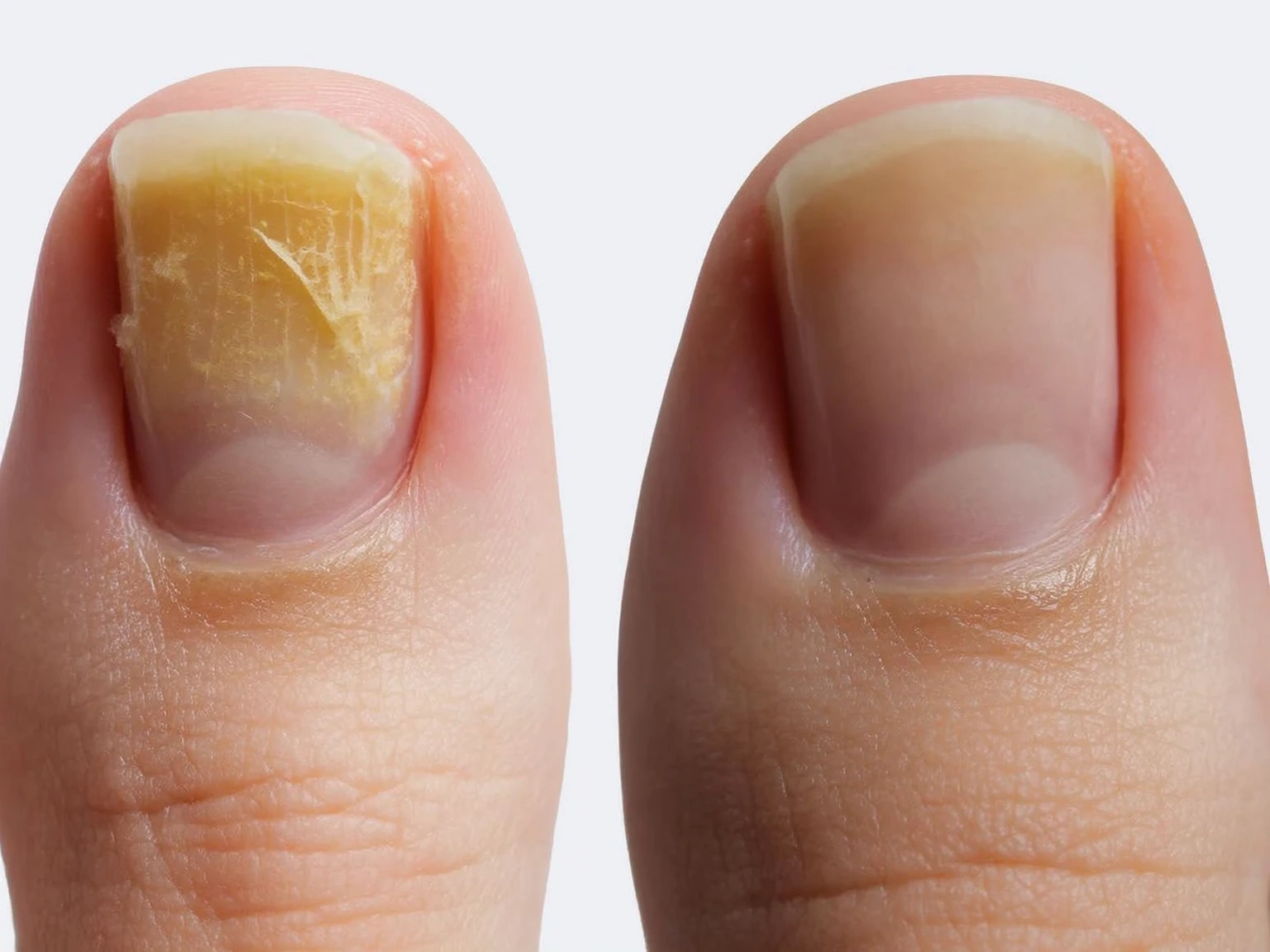
Not sure what you have? Our overview of what toenail fungus is shows how to tell it apart from psoriasis or injury. The American Academy of Dermatology and Mayo Clinic both recommend confirming the diagnosis before committing to months of treatment.
Ready to start a prescription topical?
If a topical sounds right, you can complete a short online visit and a U.S.-licensed physician will tell you whether Vuret Original is appropriate for you.
Vuret Original: Itraconazole 1.5% + Terbinafine 1.5% + DMSO
A brush-on prescription pen with itraconazole + terbinafine and DMSO to carry them through the nail. Prescribed online by a U.S.-licensed physician only if it is right for you. Compounded medications are not FDA-approved.
See Vuret OriginalFrequently asked questions
What is the most effective treatment for toenail fungus?
For severe or multi-nail infections, oral terbinafine usually has the strongest evidence. For mild to moderate cases, prescription topicals are a solid option and avoid pills. The right choice depends on how many nails are affected and your health history, so a doctor should decide.
How long does it take to get rid of toenail fungus?
Improvement is often visible at 3 to 6 months, and a fully clear nail typically takes 9 to 12 months. The nail has to grow out completely, and toenails grow slowly. Stopping early is the most common reason infections come back.
Do over-the-counter toenail fungus treatments work?
Rarely for a true nail infection. OTC products struggle to get through the nail plate, though they can help with athlete's foot on the skin. If your nail is thick, discolored or crumbly, a prescription option is more likely to help.
Are compounded toenail fungus medications FDA-approved?
No. Compounded medications, including Vuret, are made by licensed pharmacies to a doctor's prescription and are not FDA-approved. Brand products like Jublia and Penlac are FDA-approved.
Can I treat toenail fungus without seeing a doctor?
You can try OTC products, but a clinician should confirm it is fungus first, since psoriasis and nail trauma look similar. Telehealth makes this quick. See a doctor in person if you have diabetes, a foot wound, pain or spreading redness.